
Notes
The right not to appear
Reading time: 10 min
From the human safari to the algorithmic gaze: when Indigenous isolation becomes content and refusal of contact acquires value.
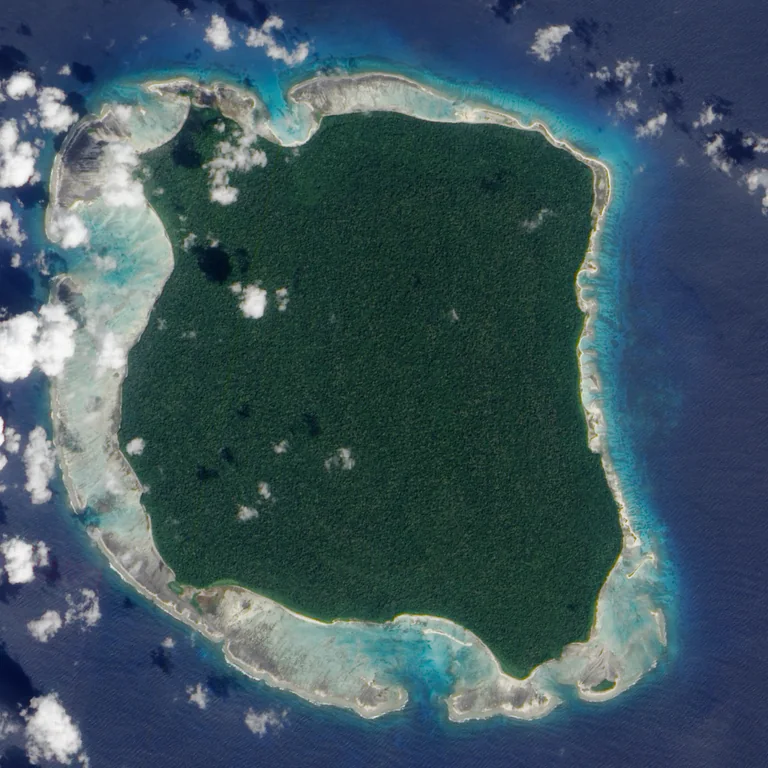
When Indigenous isolation becomes content, the old human safari finds a new infrastructure: cameras, platforms, metrics and recommendation systems.
On 29 March 2025, Mykhailo Viktorovych Polyakov reached North Sentinel Island, in the Andaman and Nicobar archipelago, in a small boat. Access to the island is prohibited. He had researched the tides and possible approaches. For roughly an hour, he blew a whistle from the water. He then went ashore for a few minutes carrying a GoPro, a coconut and a can of Diet Coke, recorded footage and collected sand before leaving. He was arrested two days later.
He did not make contact with the Sentinelese people. He did obtain something else: images.
Indian law and protective measures prohibit access to the island and to the five kilometres of sea surrounding it. In 2019, the Government of India again described its policy towards the Sentinelese using a formula it had employed for years: eyes-on and hands-off. Watch to prevent intrusions, but do not interfere with their way of life. The whole of North Sentinel Island, together with five kilometres of coastal sea measured from the high-water mark, is notified as a tribal reserve; the Coast Guard and Marine Police carry out surveillance (Government of India, 2019; Roy, 2025).
Polyakov eventually pleaded guilty. He was sentenced to 25 days in prison and fined 15,000 rupees. Yet the risk he had introduced is poorly measured in days behind bars. Contact with peoples living in isolation can introduce diseases to which they are acutely vulnerable and, above all, can override a decision that does not need to be explained in order to be respected: not to maintain contact.
A year and a half later, the episode has acquired another meaning.
An investigation by Elle Hunt, published in The Guardian on 5 September 2026, describes what organisations working to protect Indigenous Peoples in isolation regard as an emerging threat: content creators seeking to approach, locate or film communities whose separation from the outside world is itself part of what should be protected.
Survival International monitors around a dozen YouTube, TikTok and Instagram accounts connected with content about peoples living in isolation. Together they have more than 40 million followers. That does not mean every account is attempting illegal contact, nor that every representation of an Indigenous community is exploitative. The report itself describes very different practices, positions and relationships.
The ethical boundary lies elsewhere: documenting a community that is participating in that relationship is not the same as trying to locate people who have not consented to being found.
From the human safari to the feed
North Sentinel should not be confused with the case of the Jarawa people.
Sentinelese isolation is extreme, and access to their territory is strictly prohibited. The Jarawa people, also in the Andaman Islands, have instead experienced a long history of forced contact, traffic through their territory and tourist exploitation around the Andaman Trunk Road. For years, so-called human safaris were denounced there: tours in which Jarawa people were treated as an attraction.
It is precisely because of that difference that research published in April 2026 by Amitabh Vikram Dwivedi in eTropic, Jarawa as Spectacle 2.0: Tropical Tourism’s Algorithmic “Human Safari” in the Andaman Islands, is so useful.
Physical restrictions and protected zones sought to reduce those safaris. But banning the route did not necessarily eliminate the demand that produced them.
Dwivedi traces its migration into digital environments through platform ethnography, legal documents, journalistic investigations and an audit of search results, videos, posts and travel directions. His central concept is the algorithmic gaze.
In the conventional safari, someone looks and someone else is turned into the object of that gaze. In its digital version, an additional infrastructure appears: one capable of recording what attracts attention, ranking content, recommending similar material and turning certain forms of curiosity into reproducible itineraries.
The platform did not invent colonial exoticism. Nor did it invent the desire to observe people historically constructed as remote, primitive or outside modern time. But it can organise that gaze, amplify it and reward it.
Dwivedi finds images and videos circulating alongside practical travel clues while their legal and ethical context becomes less visible. YouTube and messaging networks can thereby help turn curiosity into planning.
A boundary protected on the ground becomes permeable through information.
Anthropology had been interrogating that relationship for years. Orobitg Canal (2008) understands the gaze as a relationship between the observer and the reality observed; Hirai (2002) showed how images produced from outside can reshape places and cultures around external expectations, and how communities may resist being coded by that gaze. The algorithmic gaze does not inaugurate the problem. It changes its scale and turns representation into recommendation.
When refusal itself acquires value
Colonial economies learnt to turn territories, minerals, plants, bodies and knowledge into resources. The attention economy can perform an additional operation: turning inaccessibility itself into value.
The harder someone is to reach, the greater the potential exclusivity of obtaining their images.
The more explicit the refusal of contact, the stronger the narrative promise of a supposed first encounter may become.
The less that is known about a community, the more room there is to present it as a “lost tribe”, “secret”, “savage”, or somehow outside modernity.
The Guardian shows the grammar of that market. Some content about Indigenous communities is advertised through precisely such labels or deliberately extreme categories. Videos of this kind can reach millions of views. Spectacle does not necessarily begin at the moment of encounter. It can begin much earlier, in the title, the thumbnail and the promise of access to something other people cannot see.
Consent, then, cannot be reduced to asking permission once the camera has already crossed the boundary.
Valladares de la Cruz (2014) reminds us that anthropological ethics also concerns the image constructed of other people and communities, alongside consent, anonymity and transparency. In the platform economy, that responsibility also reaches those who record, publish, recommend and monetise.
No contact is also self-determination
On 29 January 2026, Indigenous representatives and civil-society organisations meeting in Jakarta adopted an international declaration for the protection of Indigenous Peoples in isolation.
Its wording matters because it displaces the image of “undiscovered” communities. It speaks of peoples who live with limited contact or who choose not to maintain contact, and places that choice within their collective rights.
The Jakarta Declaration calls for an end to forced contact, absolute protection of territories and the creation of exclusion zones. Among those capable of violating these principles, it explicitly names states and companies, but also “missionaries, adventure tourists, and influencers” (Jakarta Declaration, 2026).
The document also gives free, prior and informed consent a particularly significant meaning in the context of peoples living in isolation: it must translate into non-intervention.
This is not, then, simply a claim to privacy.
Isolation can be a strategy for survival in the face of histories of violence, epidemics, dispossession and forced contact. The United Nations links respect for self-determination to Indigenous Peoples’ capacity to determine their political status and pursue their development freely, and recognises specific rights over lands and territories (United Nations, 2007, arts. 3 and 32). OHCHR guidelines on peoples living in isolation translate those principles into the principle of no contact and emphasise protection of life, physical and cultural integrity, self-determination and territories (OHCHR, 2012).
A people that remains outside our networks is not necessarily waiting to be discovered.
Its absence from our screens is not an information gap waiting to be filled.
The right not to appear
We might call it the right not to appear.
Not as a new legal category that already exists under that name, but as a way of bringing together recognised principles — self-determination, no contact, territorial integrity and consent — and applying them to a specifically digital problem.
Nor is it quite the same as the right to be forgotten. The right to be forgotten acts upon information that has already been captured and circulated. The right not to appear asks an earlier question: was there a right to make that capture in the first place?
Contemporary technologies are built around an almost opposite aspiration. Map. Photograph. Index. Geolocate. Turn into data. Recommend what resembles whatever captured our attention.
Even many conversations about digital inclusion begin from a well-intentioned assumption: to be connected is to be included.
Peoples living in isolation introduce a radical anomaly into that story. They remind us that sovereignty can also lie in remaining outside.
And the question extends far beyond North Sentinel.
In a world of facial recognition, mass data extraction, models trained on material obtained without consent, and systems from which it is extraordinarily difficult to disappear, the extreme case of peoples living in isolation allows us to ask a broader question: how far does a digital infrastructure’s right extend to turn into information whatever it is technically capable of observing?
A digital boundary too
Dwivedi’s research does not end with diagnosis. Its conclusion calls for effective territorial enforcement to be combined with platform accountability and community-led consent regimes.
Applied to the problem here, that means at least asking what happens when a recommendation system amplifies attempts at contact, when a platform allows such material to be monetised, or when search turns coordinates, routes and clues into practical instructions.
Demonetising content that encourages contact, preventing recommendations from turning curiosity into a “how to get there”, contextualising legal prohibitions, or stopping sensitive locations from circulating as tourist information would not, by themselves, resolve a much older historical problem. But they would acknowledge something basic: a boundary designed to protect a community loses part of its effectiveness if digital infrastructure teaches people how to cross it.
That may be why Polyakov’s gesture is so representative of this moment.
He did not reach North Sentinel in search of rubber, gold or timber.
He arrived with a GoPro.
There was very little on the beach that he could take away.
Except images.
Editorial note: AIthropology Lab does not reproduce images of Indigenous Peoples in isolation in this piece, nor does it provide routes, coordinates or instructions for approaching their territories.
References
Dwivedi, A. V. (2026). Jarawa as Spectacle 2.0: Tropical Tourism’s Algorithmic “Human Safari” in the Andaman Islands. eTropic: Electronic Journal of Studies in the Tropics, 25(2), 65–96. https://doi.org/10.25120/etropic.25.2.2026.4267
Hirai, S. (2002). Viajes nostálgicos al terruño imaginario: La reconstrucción de lugar y cultura local en la comunidad transnacional a través de las contiendas de imágenes [Master’s thesis, Universidad Autónoma Metropolitana]. BINDANI.
Orobitg Canal, G. (2008). Miradas antropológicas: Relaciones, representaciones y racionalidades. Fotografía, cine y texto en el contexto de la historia de la antropología [Anthropological gazes: Relationships, representations and rationalities. Photography, film and text in the history of anthropology]. Documentos CIDOB. Dinámicas interculturales, (12), 51–84.
Valladares de la Cruz, L. R. (2014). La ética del quehacer antropológico en tiempos globales [The ethics of anthropological practice in global times]. In C. A. Denman Champion & M. del C. Castro Vásquez (Eds.), Ética en la investigación social: Experiencias y reflexiones (pp. 199–228). El Colegio de Sonora.
Government of India, Press Information Bureau. (2019, 5 February). Sentinelese Tribe. Ministry of Home Affairs. https://www.pib.gov.in/PressReleasePage.aspx?PRID=1562728&lang=2®=48
Hunt, E. (2026, 5 September). ‘This is colonialism for clicks’: the influencers attempting to meet and film the world’s most isolated tribes. The Guardian. https://www.theguardian.com/world/2026/sep/05/colonialism-for-clicks-influencers-attempting-meet-film-worlds-most-isolated-tribes
Indigenous Peoples and Civil Society Organizations. (2026, 29 January). Jakarta Declaration: Indigenous Peoples and Civil Society Organizations for the Protection of Indigenous Peoples in Isolation.
Office of the United Nations High Commissioner for Human Rights. (2012). Guidelines for the protection of Indigenous Peoples in voluntary isolation and initial contact of the Amazon region, Gran Chaco and Eastern Paraguay.
Roy, R. (2025, 17 April). US YouTuber remains in custody in India after visiting restricted island with a Diet Coke can. Associated Press. https://apnews.com/article/b241500229a3e95a2c4bf51cae104bcf
United Nations. (2007). United Nations Declaration on the Rights of Indigenous Peoples, arts. 3 and 32.