
Digital violence and schools
A profile picture was all it took
Reading time: 11 min
Listen
Read aloud with your device's voice.
Teenagers, AI-generated fake nudes and schools, three years after Almendralejo
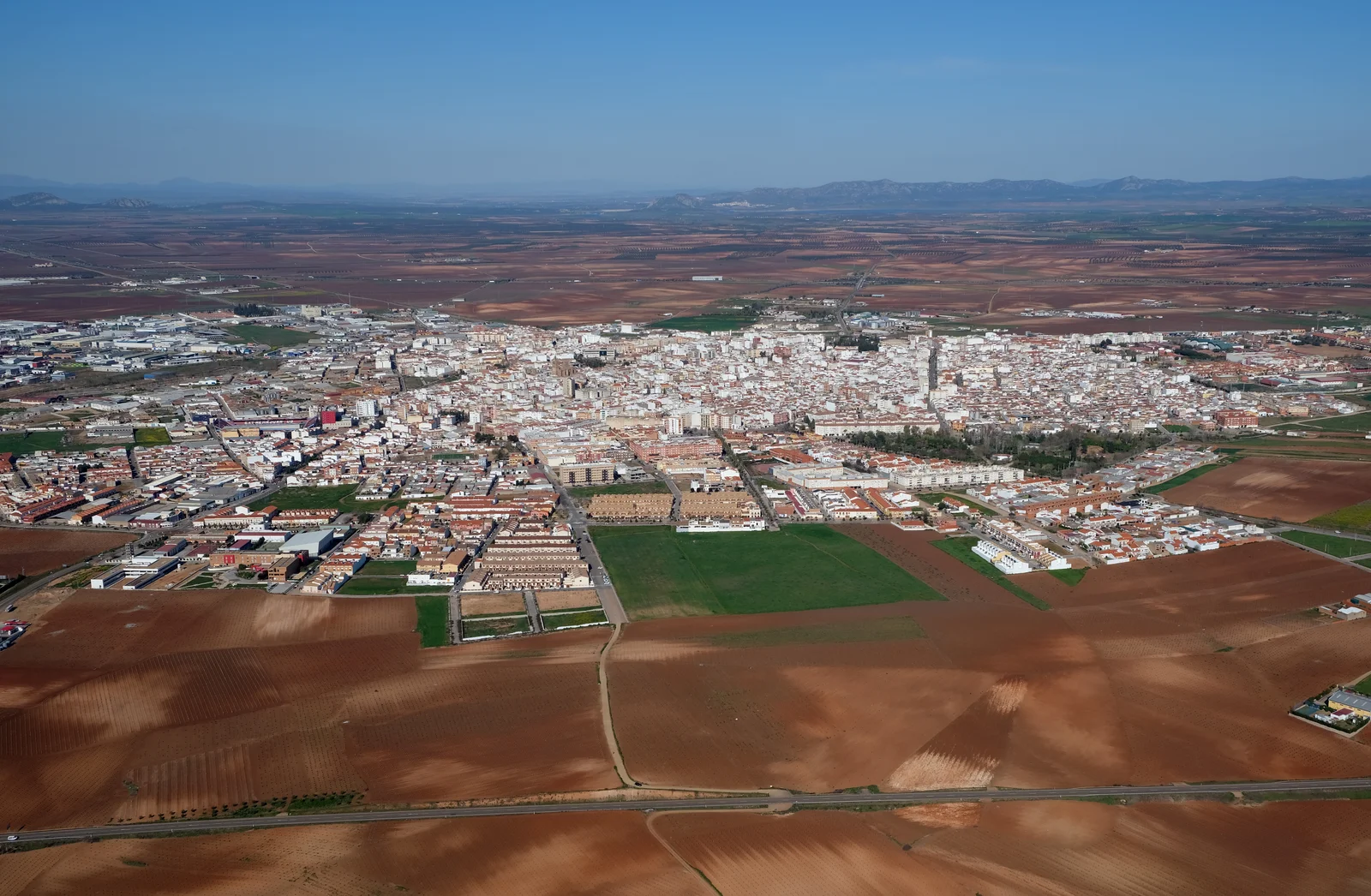
On the first Thursday of every November, UNESCO marks the International Day against Violence and Bullying at School, including Cyberbullying. This year it falls on 5 November, three years after a group of mothers in Almendralejo reported the circulation of AI-generated images falsely depicting their daughters naked. The case raises questions about how social relationships shape the harm caused by a fabricated image, and who is responsible for creating and circulating it.
In September 2023, a group of mothers in Almendralejo, in the province of Badajoz, reported that photomontages depicting their daughters naked were being circulated. The images showed nudity that had never occurred. According to the facts established by the Juvenile Court of Badajoz, the minors took the girls’ faces from their social media profiles and used artificial intelligence applications to superimpose them on images of other naked female bodies. The manipulated photographs were shared in two WhatsApp groups. On 9 July 2024, the court’s judgment following an agreed plea became public. It imposed one year of supervised release on fifteen minors, who were found responsible for twenty child pornography offences and a further twenty offences against moral integrity. The measure included education on emotional and sexual relationships, responsible use of technology, and awareness of equality and gender. The Malvaluna association, which advised the families, explained that they had accepted the agreement because it spared the girls from having to go through a trial. It called for education in equality and appropriate sex education in schools, rather than learning through pornography, ‘which generates more sexism and violence’.
Three years later, the case remains one of the best-known examples in Spain of a phenomenon that is no longer exceptional. This Thursday, 5 November, UNESCO marks the International Day against Violence and Bullying at School, including Cyberbullying, under the theme ‘The safety and wellbeing of all learners: from commitment to practice’. The 2026 edition opens the second five-year cycle of the observance and comes two weeks before the global ministerial conference on violence against children, taking place in Manila on 18 and 19 November.
The image and the harm
In cases like these, the starting point is not an intimate photograph: a profile picture was enough. Although the image is fake, the person recognisable in it is real, as is what happens to her when others look at it.
On 4 February 2026, UNICEF warned that ‘although the images are fake, the harm they cause is very real’. The same statement included an estimate. Based on representative surveys of around one thousand internet-using children aged 12 to 17 in each of eleven countries, the Disrupting Harm project, run by UNICEF, ECPAT and INTERPOL, estimated that at least 1.2 million children in those countries had experienced the manipulation of their images to create sexually explicit content over the previous year. In some of those countries the proportion reached one in 25 children — equivalent, according to UNICEF, to one child per classroom — and in some countries as many as two-thirds of the children surveyed said they were afraid someone might use artificial intelligence to create sexual images of them.
Spain was not included in that study. Recent research in secondary schools in Almería offers a closer look at the phenomenon in a specific school setting.
What 2,220 teenagers in Almería reported
Verónica C. Cala and Encarnación Soriano-Ayala, of the University of Almería, surveyed 2,220 students aged 12 to 17 at sixteen state secondary schools in the province. They published their findings this year in Child Abuse & Neglect. Among teenagers from families of Spanish origin, 7.4% reported experiencing image-based sexual abuse, compared with 9.7% of those from families of Moroccan origin. This includes the non-consensual sharing of sexual images of the person concerned, whether genuine or manipulated. For manipulated images or deepfakes specifically, the figures were 1.4% and 3.5%, respectively. Almost a third of the sample had also received unsolicited sexual images, a different experience. Among participants of Spanish family origin, this was more common among girls than boys (35.8% versus 25.6%). Where image-based abuse occurred, the perpetrators most frequently identified were peers and strangers. In this study, receiving unsolicited images was associated with greater psychological distress and more indicators of suicide risk.
The researchers caution that this was a survey conducted at a single point in time, which can identify associations but cannot establish causes. As family origin was measured solely by the father’s country of birth, differences between groups cannot be taken as evidence of cultural differences. What the study does show is that image-based sexual violence forms part of the everyday digital experience of many teenagers, and that its distribution varies by gender and family background, particularly in certain forms.
Through the eyes of other boys
In 1988, British sociologist Liz Kelly proposed understanding sexual violence as a continuum. The experiences women face, from everyday harassment to coercion and assault, are connected, even though they are not equivalent and do not necessarily lead from one to another. The concept helps place fabricated nudes within that continuum, as a new form of non-consensual sexual exposure related to much older practices of scrutinising and judging girls’ bodies.
Anthropologist Rita Segato has emphasised another dimension. In her account, developed in relation to rape and the mandate of masculinity, sexual violence is directed at the victim but is also a message sent by the perpetrator to other men, demonstrating his membership of the group. In Almendralejo, the judgment records that the images were shared in two WhatsApp groups. We do not know what those who created and shared them were seeking to achieve, and the published accounts of the judgment do not clarify this. But the way the images circulated allows us to bring Segato’s question to this case: what role does the gaze of other boys play when the image of a girl they know begins circulating for others to look at? The case cannot answer that question, but it shows why the relationships between those who make, receive and forward such images matter.
Privacy also depends on other people
In response to cases like these, the advice girls hear most often is to post fewer photographs. Researchers Alice Marwick and danah boyd studied how teenagers negotiate privacy on social media and called this phenomenon networked privacy. What is known and shown about a person also depends on what other people post, forward and interpret, meaning that no one has complete control over their own image. In Almendralejo, the source photographs were ordinary profile pictures. Asking girls to withdraw from social media to protect themselves shifts the burden onto those who have been harmed, while leaving unexamined what others did with their photographs.
What schools can and cannot do
Spain’s Organic Law 8/2021 on the comprehensive protection of children and adolescents against violence requires education authorities to establish procedures for responding to school bullying, cyberbullying, sexual harassment and other forms of violence, to be implemented in every school (Article 34). It also requires schools attended by minors to have a wellbeing and safeguarding coordinator (Article 35). Having such a role does not guarantee an appropriate response. In Complaint! (2021), Sara Ahmed examined the gap between formal complaints procedures and the experiences of those who use them: often an exhausting process in which the complaint itself comes to weigh on the person making it. Her work focuses on universities, and applying it to secondary schools remains a hypothesis. Yet it prompts a question: how does a school respond when a girl reports what has happened but must continue sharing classrooms or corridors with those who circulated her image?
There is also a mismatch between where the harm circulates and the tools available to stop it. The Spanish Data Protection Agency’s Priority Channel allows people to request the urgent removal of sexual or violent content published online without consent. The Agency itself warns, however, that the channel cannot be used when the content is distributed through instant messaging services such as WhatsApp or Telegram — the route used in Almendralejo. And once an image has reached people’s phones, copies and screenshots can remain even after it disappears from the place where it was posted.
On 26 October, UNESCO published a technical note, Connected and safe, offering guidance to education systems on technology-facilitated violence. It notes that around one in ten students worldwide has experienced cyberbullying; that in 44 countries across Europe, Central Asia and North America the proportion rose from 12% to 15% between 2018 and 2022; and that girls, students with disabilities and LGBTI students experience different and often more severe forms of harm. It also stresses shared responsibility: technology companies, platforms and regulators determine many of the conditions in which harm arises, and schools cannot resolve on their own what happens through tools they do not control. For its part, UNICEF praised developers who build safety into their systems from the outset in February, while warning that too many AI models are being developed without adequate safeguards.
A law that never made it through
In March 2025, the Spanish Government submitted to Congress a draft Organic Law on the protection of minors in digital environments, to be considered under an expedited procedure. Among other measures, it proposed adding Article 173 bis to the Criminal Code. This would have imposed a prison sentence of one to two years on anyone who, without authorisation and with the intention of undermining another person’s moral integrity, distributed AI-generated or AI-manipulated images or voice recordings made to appear real and depicting sexual or seriously degrading situations. Where the victim was a minor, the proposed sentence ranged from eighteen months to two years. The explanatory memorandum referred to this content as ultrafalsificaciones — ultra-fakes. The bill spent more than ten months awaiting a report from the Justice Committee and lapsed on 6 October 2026, when Parliament was dissolved ahead of the 29 November elections. The bill on AI governance met the same fate, as this publication reported on 8 October. The Almendralejo case was prosecuted under existing criminal offences, and until specific legislation is passed, cases brought before the courts will have to be dealt with under those provisions.
Towards 25 November
Much of the public debate about protecting teenagers online focuses on restricting their access to mobile phones and platforms, or monitoring what they do. Less attention is paid to what teenagers themselves do when an image like this arrives on their phone. The person who creates it, the person who forwards it, the person who receives and deletes it, and the person who alerts the girl do not bear the same responsibility. Each decision may be shaped by peer pressure, fear of being singled out, and hierarchies of friendship and popularity. Anthropology can help us understand relationships within those groups, because they influence how an image circulates, the forms humiliation takes, and whether its circulation can be stopped.
There is also the question of who provides redress, and how. In Almendralejo, it was the mothers who initiated the complaints. One of them, Miriam Al Adib, travelled to Brussels at the invitation of a Member of the European Parliament from the European Parliament’s Intergroup on Children’s Rights. Her intervention raises questions about how the work of support and redress is shared among families, schools and the institutions responsible for providing it; how much of that burden falls on women; and what role the girls themselves have in deciding what form of redress they need. Deleting an image from a phone does not guarantee that it will stop circulating. What happens afterwards in the classroom, among friends and at home also affects how long the harm lasts, and calls for responses from schools, families, teenagers themselves and public institutions. The 16 Days of Activism against Gender-Based Violence begin on 25 November and end on 10 December, Human Rights Day.
Sources
- UNESCO · International Day against Violence and Bullying at School (2026)
- UNESCO (2026) · Connected and safe
- EFE (9.7.2024) · Libertad vigilada para los menores que manipularon «desnudos»
- UNICEF (4.2.2026) · Los abusos cometidos mediante deepfake siguen siendo abusos
- Cala, V. C. & Soriano-Ayala, E. (2026) · Image-based sexual violence among adolescents in multicultural schools
- Kelly, L. (1988) · Surviving Sexual Violence
- Segato, R. L. (2003) · Las estructuras elementales de la violencia
- Marwick, A. E. & boyd, d. (2014) · Networked privacy: How teenagers negotiate context in social media
- Ahmed, S. (2021) · Complaint!
- Ley Orgánica 8/2021 · Artículos 34–35
- AEPD · Canal prioritario para contenidos sensibles en internet
- Congreso · Proyecto 121/000052, XV legislatura
- Real Decreto 806/2026, de 5 de octubre