
Anthropology and development
Ayiti: Trouillot, AI and a single finite world
A note on Haiti, international aid and the political economy of artificial intelligence, read through Michel-Rolph Trouillot, colonial memory and human kinship.
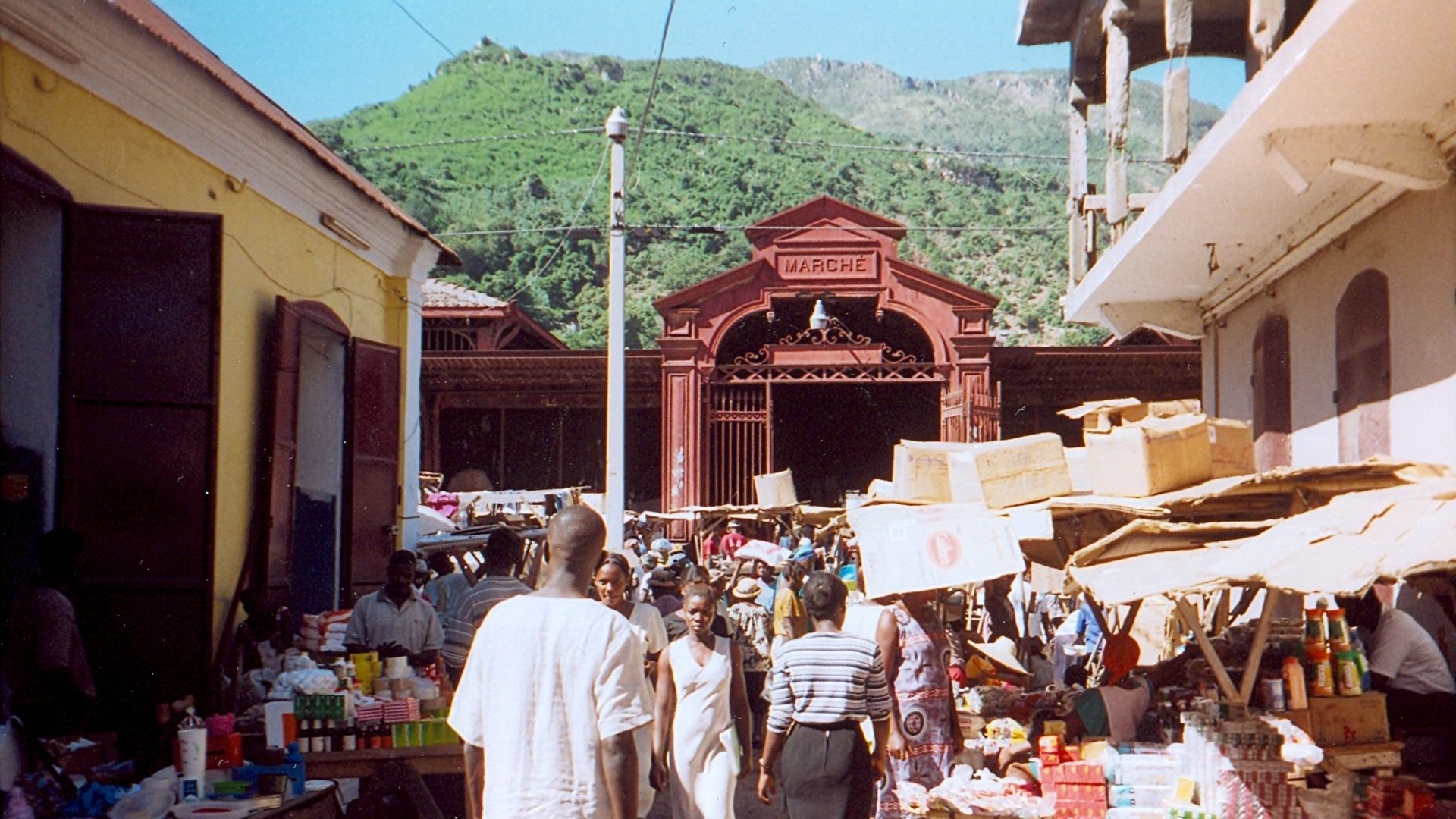
There are countries the world looks at only when it can no longer look away. Haiti is one of them. It appears in the press when violence overflows the capital, when hospitals close, when girls, boys and adolescents are recruited by armed groups, when a displacement figure breaks the previous record once again. Then the country’s name returns to the international circuit of compassion, of communiqués, of promises and of incomplete missions. But it almost always returns in the same way. As disaster.
Haiti hurts. It hurts because this is not a sudden misfortune or an inexplicable catastrophe. It hurts because its suffering has a history, those responsible, institutions, debts, interventions and silences. It hurts because there, with unbearable clarity, one of the most palpable forms of the failure of our shared humanity comes into view. We are capable of organising global futures markets, entire prediction industries, digital infrastructures on a planetary scale and brilliant discourses on innovation. But we are not capable of sustaining with dignity the lives of millions of people trapped between violence, hunger and an international aid that is always insufficient.
There is no need to write this from a place of judgement. Haiti does not need us to look at its pain from a compassionate superiority. It needs something harder and closer. That we recognise it as part of our own world, of our own species, of a common history that cannot be divided between those who innovate and those who survive. The distance between the investment in artificial intelligence and the underfunding of Haiti speaks not only of economic priorities. It speaks of a fracture of kinship.
At AIthropology Lab we usually look at artificial intelligence through anthropology. That is why Haiti does not fall outside our field. On the contrary. If AI has become one of the dominant names of the future, Haiti forces us to look at the reverse of that promise. Not in order to set technology and humanity against each other in a simplistic way, nor to pretend that the money invested in AI could simply be transferred to a humanitarian plan. The comparison does not work like that. But it does serve something deeper. It shows where the imagination of the world is concentrated and where mere survival is administered.
To think this through, Michel-Rolph Trouillot is not just one more reference. He is at the centre of this note. Trouillot, a Haitian anthropologist, understood as few have that power does not only dominate bodies or territories. It also organises what can be said, archived, remembered and thought. In Silencing the Past, he showed that the Haitian Revolution was for a long time unthinkable for the European intellectual order. A revolution of enslaved people proclaiming themselves free and equal did not fit the categories of those who claimed to represent reason, freedom and civilisation. That is why it was minimised, distorted or silenced even when it had taken place before the eyes of the world.
That silencing does not belong only to the past. It keeps operating every time Haiti appears reduced to the sum of poverty, violence, corruption, natural disaster and dependence. It keeps operating when the country is narrated as a manageable problem rather than as a historical subject. It keeps operating when its community networks, its journalists, its feminist organisations, its churches, its schools, its diasporas and its everyday ways of sustaining life are turned into context, while international agencies and external expertise take the place of explanation.
Haiti is not a void awaiting intervention. Nor is it a pure victim, nor a ruin without thought of its own. It is a society shaped by a brutal history, from colonial slavery to the debt imposed by France, from foreign occupations to the international missions that also left wounds, including the cholera epidemic. That history does not explain everything, but it makes it impossible to accept the comfortable lie that the Haitian crisis is merely the result of an internal incapacity.
Haiti was not poor before it was plundered. That sentence should accompany any honest attempt to write about the country. Before being named a humanitarian problem, before becoming an international synonym for fragility, Haiti was Saint-Domingue, a central piece of French colonial wealth. Its plantations of sugar, coffee, indigo and cotton were not an exotic landscape or a backward economy. They were a machinery of European accumulation sustained by enslaved labour, extreme violence and mass mortality.
During the eighteenth century, the former Saint-Domingue fed an enormous part of European sugar and coffee consumption. The everyday sweetness of many European tables, the coffee of commercial cities, the prosperity of ports, merchant houses, insurers, banks and owning families had enslaved bodies in the Caribbean behind them. Haiti’s present cannot be separated from that history. Haitian poverty is not the natural reverse of an internal lack. It is also the historical residue of an extracted wealth.
The independence of 1804 was not received as a universal promise of freedom, but as a threat. The first Black republic born of an anti-slavery revolution had to pay for having been free. In 1825, France recognised Haitian independence under military threat and demanded an indemnity intended to compensate former slaveholders. Haiti had to go into debt to pay those who had lost their property over human beings. That inversion of the most elementary sense of justice is still difficult to write without rage. The freedom of a people was turned into an invoice.
Here Trouillot becomes indispensable. The Haitian Revolution was not only silenced because it caused discomfort. It was silenced because it disordered the whole map of European modernity. Europe could speak of freedom, equality and reason while part of its wealth depended on colonial slavery. Haiti blew that contradiction open. That is why it was punished, isolated, indebted and narrated for far too long as an anomaly. It was not only a revolution that was silenced. The historical debt of those who benefited from its economic defeat was also silenced.
The United States occupation from 1915 to 1934 added another layer to that history. It was not neutral aid or a benevolent tutelage. It was a military occupation. There was control of institutions, intervention in finances, constitutional reordering, repression of resistance and a new architecture of public force marked by external interests. Even after the formal withdrawal of the troops, the United States retained influence over Haitian finances for years. Haitian sovereignty was treated again and again as something conditional, negotiable, administrable from outside.
That is why it hurts so much to hear today that Haiti “does not work”. That sentence erases too much. It erases the plantation, the debt, the occupation, the intervention, the badly designed aid, the political violence, the interests of local and foreign elites, global inequality and the concrete lives of those who have sustained the country despite everything. Haiti is not the failure of a people. Haiti is one of the places where the failure of a world order is seen most starkly: an order that first extracts, then punishes, later administers and finally is surprised at the ruins it leaves behind.
The current situation is devastating. The violence of armed groups has transformed everyday life. Port-au-Prince has largely fallen under the control or influence of gangs, with figures ranging between 85% and almost 90% depending on the moment and the source. The violence has spread beyond the capital towards Artibonite and the Centre. Internal displacement already far exceeds a million people, and the most important trend is not only its volume but its territorial shift. More and more families flee towards the provinces, taken in by communities that were already stretched to the limit.
The data on children is almost unbearable. UNICEF has warned that minors may make up as much as half of those who form part of armed groups, and that child participation in gang activities, including recruitment, rose by 700% in the first quarter of 2025 compared with the same period the previous year. There is no clean way to read that figure. It is not only an indicator of insecurity. It is a fracture of childhood as a social promise. It is the conversion of girls, boys and adolescents into pieces of an armed economy where the future narrows until it merges with immediate survival.
Meanwhile, the international response arrives late, fragmented and underfunded. The United Nations humanitarian plan for Haiti in 2025 required around 900 million dollars to assist millions of people. By the middle of that year it had received only around 9% of what was needed. The World Food Programme went so far as to request 46 million additional dollars to feed two million Haitian people, including thousands in a catastrophic situation. These are small figures compared with the magnitude of the suffering. They are smaller still compared with the money available in other circuits of the global economy.
This is where artificial intelligence comes in. According to Stanford’s AI Index 2026, global corporate investment in AI reached around 581.7 billion dollars in 2025. The full humanitarian appeal for Haiti was around 908 million. The approximate ratio is 640 to 1. The figure must be handled with care. We are not comparing the same kind of money. Corporate investment, acquisitions, public offerings and private capital are not equivalent to humanitarian aid. But as a map of priorities, the distance is brutal.
In 2025, hundreds of billions of dollars flowed towards a technology presented as the frontier of the future. In Haiti, at the same time, a basic humanitarian plan was left almost empty. On one side, AI appears as promise, productivity, technological sovereignty, competitive advantage, acceleration. On the other, Haiti appears as emergency, containment, risk, fragility, stabilisation. That difference of vocabulary is also a difference of world. It does not only express priorities. It produces them.
The anthropology of development has spent decades warning against the false neutrality of these categories. Arturo Escobar showed that “development” is not only a public policy or a technique of improvement, but a historical way of producing the so-called Third World as an object of intervention. David Mosse taught that aid projects work not only because of what they do on the ground, but also because of the narratives that sustain their coherence before donor countries, technical staff and institutions. Pérez Galán, writing from the anthropology of development, reminds us that the field cannot be reduced either to abstract denunciation or to social engineering. We must look at practices, discourses, actors, interests and contradictions.
The Declaration of Barbados can be read here as an old warning that is still valid for anthropology. Not because the Haitian case is equivalent to that of the Latin American Indigenous peoples to whom those declarations referred. It is not. But Barbados named forcefully something that does run through this text. No people should be reduced to an object of salvation. No discipline should grow accustomed to speaking for those who have been harmed. No aid policy should be confused with liberation if it does not recognise the voice, the organisation and the self-determination of those who live the wound.
The first Declaration of Barbados, in 1971, and the second, in 1977, marked a critical turn against paternalistic indigenism and against an anthropology that could study peoples without truly taking on their struggles. Their lesson is not a recipe for Haiti. It is a compass. Aid that does not listen can feed, heal or save lives, and that matters. But if it does not recognise the Haitian people’s own voice, it once again imposes from outside the framework of the possible. It once again produces dependence where it claims to produce development.
Trouillot allows us to add something decisive to that compass. The problem is not only that Haiti receives less money. It is that it receives less world. Less capacity to be heard as a producer of diagnosis. Less right to appear as a place of political theory. Less possibility of being thought of outside the niche of lack. In Global Transformations, Trouillot spoke of the “savage slot”, that symbolic place the West reserves for its others, for those who appear as backward, problematic or incomplete. Today we might say that AI occupies the niche of utopia and Haiti the niche of ruin. The first summons investment because it seems to contain tomorrow. The second summons aid because it seems unable to leave yesterday behind.
That distribution does not need to be denounced stridently in order to be unbearable. Not because AI is irrelevant. Not because all technological investment is illegitimate. But because the contrast reveals a profoundly broken economy of belonging. We celebrate the capacity of machines to write, translate, classify, diagnose, surveil or predict, while millions of people still cannot count on security, food, shelter or schooling. The humanity that marvels at its generative models is the same one that fails to fund the minimum of a humanitarian response in Haiti. There lies the failure. Not in the technology itself, but in the hierarchy of attention that surrounds it.
If all those hundreds of billions invested in artificial intelligence could listen, perhaps the first truly human prompt would not be “optimise my productivity”, nor “summarise this document”, nor “predict the next market”. It would be something more uncomfortable and more fraternal.
Help us imagine how to reorganise our resources, our debts, our technologies, our institutions and our forms of care so that no people is condemned to suffer the misery that runs through Haiti, today and yesterday. Do not answer from charity. Answer from a shared belonging to a single humanity in a finite world.
That prompt does not expect a machine to save Haiti. That would be absurd and dangerous. But it does shift the centre of the conversation. The task would no longer be only to make faster, more profitable or more convincing systems. It would be to prevent our collective intelligence, human and artificial, from continuing to grow in capacity while it shrinks in kinship.
The word kinship must also be used with care. Not as sentimentalism, but as material awareness. We share atmosphere, oceans, supply chains, colonial memories, debts, migrations, epidemics, foods, minerals, data, servers, hunger and climate. No technology really belongs to a separate world. AI is trained on planetary infrastructures. Haiti suffers on that same planet. Between the two things there is no simple relationship, but there is a historical neighbourliness. We live inside the same house.
It is not about asking a model to save Haiti. That would be another form of technocratic fantasy. It is about using the brilliance of AI to illuminate its shadow. At one end of the economic planet, data centres, chips, venture capital, companies, governments and universities compete to produce ever more capable systems. At another end, the humanitarian plan of an entire country is left almost empty. The same era that celebrates machines able to converse like people tolerates that millions of people be treated as a deferrable emergency.
There the contrast ceases to be a comparison of budgets and becomes a scene of belonging. It does not say that we must switch off AI in order to feed Haiti. It says something harder to dodge. It says that humanity has resources, coordination, ambition and speed when it decides that something belongs to the future. And it also says that Haiti continues to be placed, again and again, in the position of what can wait.
And yet, we must be careful. Haiti must not become a rhetorical resource for criticising AI. That would be another form of extraction. Using Haitian pain as an easy argument would repeat the very gesture this note seeks to question. The task is another. It is to hold the discomfort without appropriating the voice. It is to recognise that Haiti speaks, thinks, remembers, organises, cares, resists. It is to admit that many of its forms of agency do not fit well into the indicators used by donor countries, banks, governments or platforms. It is to accept that the total transparency demanded by the external gaze can also be a form of domination.
The writer Édouard Glissant defended the right to opacity. That idea matters here. Haiti does not have to become wholly legible in order to deserve justice. It does not have to become a perfect database, or a humanitarian laboratory, or an exemplary case of resilience. Aid should not demand, as a condition, that the country let itself be fully translated into the language of projects. To listen is not the same as to capture. To accompany is not the same as to administer. To repair is not the same as to govern from outside.
For AIthropology Lab, the lesson is uncomfortable and necessary. To think AI anthropologically does not consist only in studying algorithms, biases or models. It also consists in looking at the historical conditions that decide which problems deserve infrastructure and which deserve only compassion. It consists in observing how the future is distributed unequally. It consists in seeing that the very civilisation capable of investing gigantic sums in intelligent machines coexists with the political incapacity to sustain concrete human lives.
Haiti forces us to abandon innocence. It is not enough to say that the world is complex. It is not enough to lament the violence. It is not enough to celebrate that technology might one day help. There are moments in which the distance between what we know and what we do becomes unbearable. Haiti is one of those moments. And Trouillot, from Haiti, keeps reminding us that silences are not voids. They are products of power.
Perhaps that is why the minimal gesture of this note is to refuse to look at Haiti only as disaster. To name the pain, yes. To name the failure, too. But not to enclose the country in its suffering. To say Ayiti is to give the country back a name older than the plantation and a first person, even if incompletely and from outside. It is to remember that Haiti is not only what the world has failed to save. It is also what the world exploited, indebted, occupied, administered and refused to listen to.
Trouillot taught us that silences are not simple absences. They are produced facts. They are manufactured in incomplete archives, in comfortable narratives, in expert categories, in aid that does not listen, in figures that count bodies without counting history. Today, the silence about Haiti does not consist in the country not being talked about. Haiti is talked about all the time. The silence consists in talking about it as though its present had no genealogy, as though its pain had no creditors, as though its people could only appear before the world in the form of victim, threat or beneficiary.
This is also why it is worth not leaving Michel-Rolph Trouillot’s voice alone in this note. Haiti does not fit into a single voice, not even an indispensable one. Alongside him resonate other Haitian writings that have sustained memory, language and everyday life against the reduction of the country to catastrophe. Évelyne Trouillot, a writer in French and Kreyòl, reminds us through literature that Haiti must not only be explained. It must also be narrated from within, with its bonds, its losses, its homes, its bodies and its words. That presence does not displace the anthropological argument. It makes it more just.
If artificial intelligence is going to occupy such a large part of our collective imagination, then an anthropology of AI cannot limit itself to studying models, biases or interfaces. It must also look at the places that future leaves out. Haiti is one of them. To look at it head-on does not repair the debt, does not feed a displaced family, does not give back the stolen childhood of those who have been pushed into violence. But not to look at it, or to look at it only as a humanitarian file, is to keep taking part in the silence.
Haiti’s failure is not Haitian. It is ours. It belongs to a world capable of turning cane, coffee, bodies and now data into wealth, but incapable of turning that wealth into shared care. It belongs to a humanity that knows how to build machines that respond, but does not yet know how to respond to those who have suffered most from its history.
Haiti does not ask us for a quick emotion. It forces us into a slower belonging. To understand that there is no worthy technological future if part of humanity is fixed in the position of permanent emergency. To remember, with Trouillot and with the best critical tradition of anthropology, that silences are not broken simply by talking more. They are broken by changing who can speak, who can decide and who counts as a full part of the common world.
On a finite planet, no pain is really far away. And no intelligence, however artificial, should help us forget that we are still one and the same species.
Working sources
This note draws on recent data from the United Nations, OCHA, IOM, UNICEF, Reuters, AP, the OECD, Stanford HAI and the research materials prepared for AIthropology Lab. The anthropological framework comes from Michel-Rolph Trouillot, Arturo Escobar, David Mosse, Beatriz Pérez Galán, the Declaration of Barbados and the critical anthropology of development worked on in the laboratory. The closing also incorporates the Haitian literary resonance of Évelyne Trouillot as a way of not reducing Haiti to an object of external analysis.