
Digital archaeology
AI and archaeology: revolutionary discoveries in Nazca
A note on the use of deep learning to identify new geoglyphs in the Nazca region.
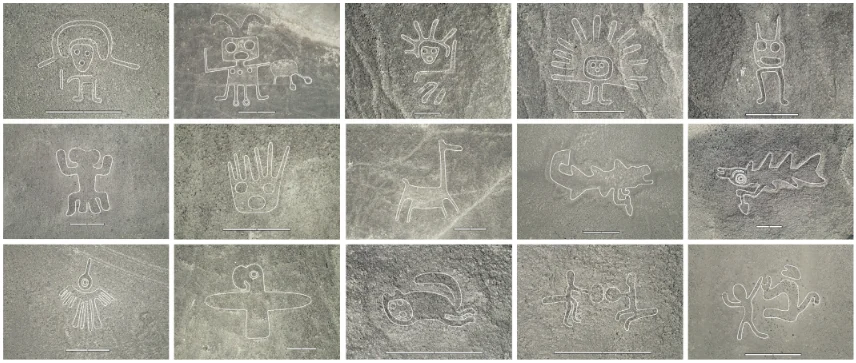
A recent study published in PNAS has shown how artificial intelligence is revolutionising archaeology, making it possible to almost double the number of known figurative geoglyphs in the Nazca region in just six months of fieldwork. This research, carried out on the Nazca Pampa, applied deep-learning models to identify 303 new geoglyphs that had been practically invisible to the naked eye.
AI and the discovery of geoglyphs
Thanks to an AI system trained on high-resolution images, the researchers were able to distinguish two main types of geoglyph: the line type, associated with communal rituals, and the relief type, which probably shared information about human activities with small groups. The model made it possible to speed up the analysis of vast desert areas, overcoming the limitations of traditional surveys.
Anthropological implications
The findings reinforce the hypothesis that the Nazca geoglyphs performed distinct social and ritual functions. The line type, generally depicting wild animals, appears to be related to communal ceremonies, while the relief type, which includes human figures and decapitated heads, suggests a more individualised or small-group use, possibly along pilgrimage routes.
Towards the future of AI in archaeology
This study underlines the potential of AI to accelerate archaeological discoveries and improve our understanding of ancient civilisations. The combination of machine learning and remote-sensing techniques is transforming the way we explore the past, offering new perspectives on human interactions and their cultural manifestations in the landscape.
For further details, the original publication can be consulted in PNAS.
Sources and related reading
- AI-accelerated Nazca survey nearly doubles the number of known figurative geoglyphs and sheds light on their purpose — PNAS (2024)
- AI-accelerated Nazca survey nearly doubles the number of known figurative geoglyphs and sheds light on their purpose — ResearchGate (2024)
- Antropología Social e Inteligencia Artificial — Dialnet (2001)